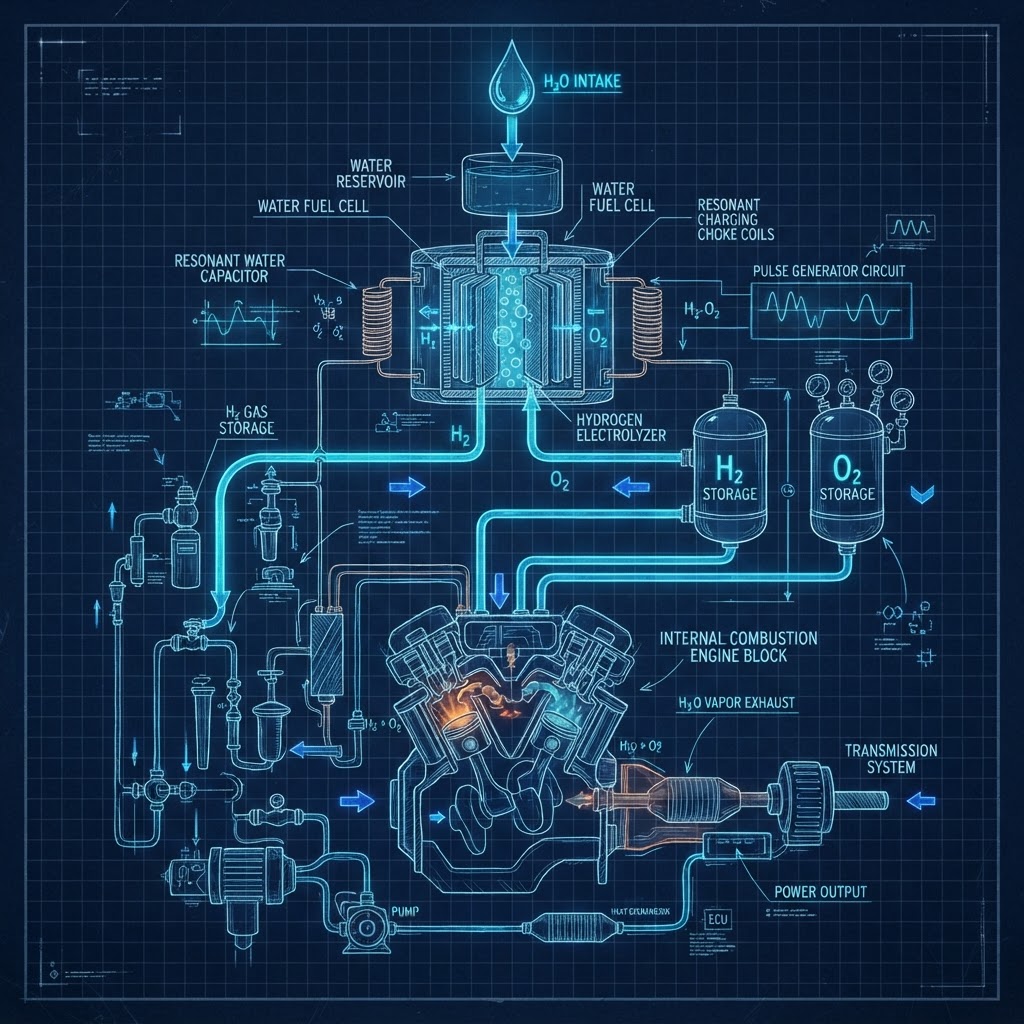
Water-Fuel Engine Schematics
Schematic plans for a water-based engine — a Stanley Meyer-style water fuel cell and a hydrogen electrolyzer system — with a draft letter to Audi Head Office and the real thermodynamics of splitting water for fuel.
The Schematics · Water-Based Engine
Reality check: You cannot get net energy from splitting water and recombining it — the first and second laws of thermodynamics forbid it. Stanley Meyer's water-fuel-cell patents were never independently validated, and a 1996 Ohio court found his claims fraudulent. Real hydrogen vehicles use hydrogen produced externally (by electrolysis powered by the grid or renewables), not tap water poured into a tank. These schematics are a creative prop, not an engineering claim.
How a real water-derived fuel actually works
Reference figures from published PEM electrolyzer and hydrogen fuel-cell engineering data. The water-fuel engine above is fiction; these numbers are not.
Letter to Audi Head Office
To the Audi Head Office,

I am writing to share the enclosed water-fuel engine schematics developed in the Q Branch studio — a water fuel cell and hydrogen electrolyzer concept intended for the Stanley Ward NHS emergency response fleet.

The design proposes an onboard molecular split of tap or salt water, with a claimed space-energy resonance, to power a high-speed amphibious responder with an integrated 8888 healing pod and bio-neural security.

We present these plans in good faith as a creative prop, not as a validated engineering claim, and we welcome Audi's review of the real hydrogen fuel-cell and electrolysis fundamentals referenced alongside them.

With respect,
Q Branch — Covert23 Hub